Friday, November 19, 2010

Harry Potter & The Deathly Hallows Release


Harry Potter fans everywhere have been eagerly awaiting the release of Harry Potter and the Deathly Hallows pretty much since July 16th, 2009, when Chamber of Secrets was released. Deathly Hallows, for those of you who aren’t die-hard Potter fans, is the 7th installment in the Harry Potter film series and is the first of a 2-part conclusion to the series. The movie is scheduled for release on November 19th and theaters across the country will be packed with eager fans, waiting hours before the movie’s midnight premier. While I have seen all the Harry Potter movies and will likely be in the theaters opening weekend, I am not an especially big fan. However, i have a number of friends who are HUGE fans and Harry Potter has a huge fan following with children and adults alike After seeing the preview for the movie (below), its mass-appeal is pretty clear.

While Harry Potter’s Hogwarts, Hogsmeade, Diagon Alley and the fantastic creatures, people and cultures that surround them are fantasy out of the author J.K Rowling’s imagination, many of places where the films shot are real places steeped in a rich, fabulous history of their own. So, to explore some of these real places and their history, we’re going to play:
Name that Harry Potter Location!


Number 1:
Alwnick Castle is located in Northumberland, England and parts of it were first built in 1096. It was built to defend England’s northern border against Scottish invasions. It played an important role in the War of the Roses in the 1460s between the houses of York & Lancaster. It is considered an example of Norman & Romanesque architecture.

You'll probabaly remember it from this scene.


Number 2:

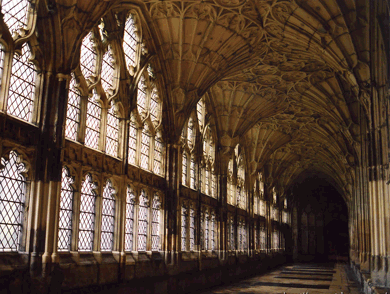
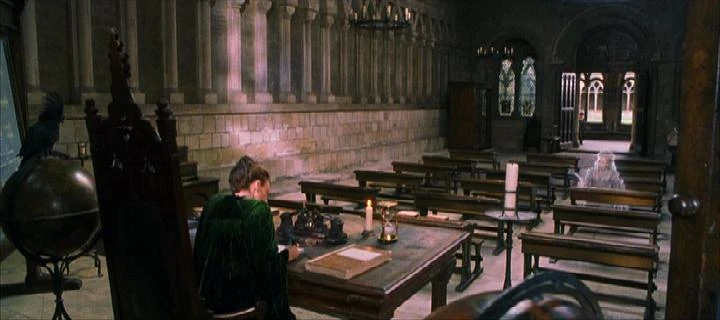
Durham cathedral dates back to 1093 and is a UNESCO World Heritage site and one of the best examples of Norman and Romanesque architecture and is also considered to have stood as the architectural example for much of the Gothic architecture that followed in northern France. It took almost 50 years to complete construction.
a. You'll remeber its from the following scene from what movies?


b. Its chapter house served as the location for which part of Hogwarts ?


c. Its beautiful courtyards were used in many scenes including this one from which movie?


Number 3:
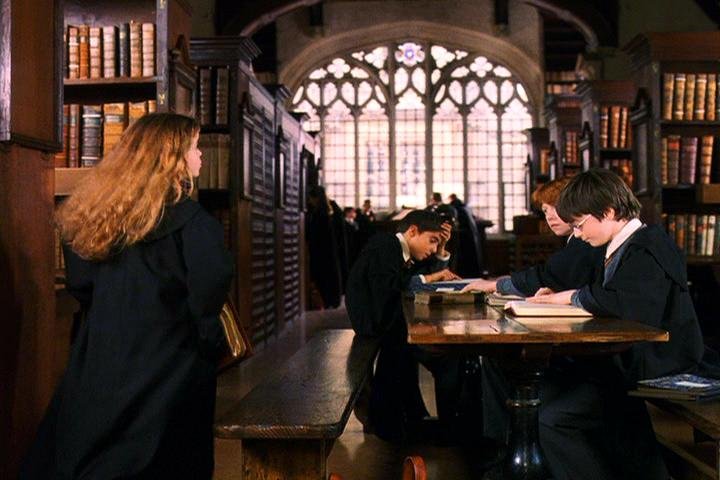
Bodleian Library is one of the oldest libraries in Europe and is located within the historic Oxford University. It dates back to 1602 and was founded by Thomas Bodley who supported the library and helped it grow enormously within the first 10 years it was open. The physical building itself has been significantly expanded upon throughout the years. The library therefore, features aspects of Gothic, classical and Baroque architecture.

You'll remember it from the following scenes in which movies?
a. scene 1
b. scene 2
The following video was filmed in the dinning hall at Christ Church, also a part of Oxford. I'm sure you can guess which part of the hogwarts castle this place was used for.
Harry Potter: Dining Hall from Sarah Abendschein on Vimeo.
c. Can you name the film this scene is from?

Locations at Oxford also included the Divinity School, which is physically attached to Bodley's Library.
d. Can you tell what this location was used for?


Number 4:


Glenfinnan Viaduct in Scotland is a functioning railway constructed at the turn of the 20th century, which is still a functioning passenger train route today. The Hogwarts express can be seen crossing these tracks in many of the films, but which movie featured this scene? 


Number 5:


An Anglo-Saxon prince founded Gloucester Cathedral as a religious house in 678 A.D. Its original abbey is Norman-style architecture with many gothic additions around the center. One of the interesting features of Gloucester besides its impressive architecture is its very early images of sports. The cathedral has a stained glass window which shows one the earliest images of a golf game and there is carved images on a wall believed to be one the earliest images of medieval football.

a. The scene from this movie is actually filmed in the monk's lavatory!
b. The extra's from this movie's scene were  almost all real studets from Gloucester's school.


So how'd you do? Post your answers and we'll see who can get the most right.

Now: Do a little reading through the links provided on each of the locations where the movies were shot. Why do you think these places were chosen? Choose one of the scenes from the movie that are described above, or choose one of your own. Go back to the original book's passage(s) that inspired it.

Read J.K. Rowling's description of the character's surroundings. What does she say about the locations and how does she describe them? How do the real-life locations chosen by the filmmakers compare to Rowling's description and what you may have pictured in your imagination? Can you remove the magical wizarding world from your perceptive of these places and imagine the real people and events that make up their real history? Share your thoughts!


Sunday, October 31, 2010

The World Series

The World Series Championship in baseball finished its best-of-seven championship series tonight between the San Fransco Giants and Texas Rangers. Check out a quick clip here.


 I personally am not a baseball efficianodo, but here's what i can tell you: It was the Giant's first championship win since 1954, when they were still located in New York. Since im not much of an expert, I looked to none other than FaceBook for help. To quote a good friend of mine's status reaction to the win:  


"Congrats, Giants. You are now champions of the world!


...Of American baseball!"


and my friend makes a point. MLB's World Series is a championship between the winners of the American and National Leagues. While it is the highest level championship in professional baseball and teams from Canada do participate, there are no other countries involved in it. However, the media regularly refers to the winners, as pointed out by my friend above, as “world champions” of baseball. Why is this?


This is partially due to the fact that before the 1990s, few countries beyond the US, Canada and to a lesser extent, Mexico, had any professional baseball to speak of. It is, after all the national pastime of America. However, by the 1990s, baseball was being played professionally in many countries around the world. Today, many of the players in MLB are international. Many consider gaining entrancing into America’s MLB the goal of a baseball career, partially due to the fame and fortune associated with it. In fact, more than 45 countries have contributed players to MLB. A huge number come from Latin America, especially the Dominican Republic, Puerto Rico & Venezuela. But major league baseball players have hailed from Afghanistan, Samoa, Saudi Arabia, China & Indonesia. Some interesting facts:


  • Baseball legend Jose Canseco was from Cuba & Sammy Sosa was from the Dominican Republic.
  • This year in particular, there are players from 18 different countries.
  • The 1894 Alien Exemption Act barred Canadian athletes from gaining US employment and spurred at least 7 players to alter their birth certificates in order to avoid the restrictions.
So because I’m no baseball expert I’m going to need some help:

What do you think about the Giants being “world” champions of American baseball?
Do you think the title matters?
Is this once of those times where trying to be politically correct is just plain silly?
What else is going on in the world of Major League Baseball that I’m missing and why does it matter?

Halloween History

Happy Halloween! 


Halloween is observed every year on October 31st in not just the US, but Ireland, Scotland & Canada. We all know the standard costume-wearing, trick or treating, jack-o’-lanterns and haunted houses. Many of us have a good idea of the ancient origins of Halloween as a end-of-summer celebration practiced by the Celts. Called Samhain, the Celts celebrated the end of the lighter-half of the year & welcomed in the darker-half. They believed that during this transitional time, it was easy for spirits to pass between through to the real world and therefore, people often worse masks, cloaks and painted faces to disguise themselves from the harmful spirits. So it’s pretty easy to guess why we still wear costumes on Halloween, especially dark, scary ones, but what about the rest of the traditions we take for granted?


Let's start our exploration off with a quiz.


Because its a holiday and we're all too hopped up on candy to do much reading, here's a video to help.


Think about your favorite part of Halloween and its specific origin. I encourage you to do some research of your own on the topic and let us know what you've discovered.


And, as always, I’m asking you to think about some of the comments made on the video about the controversial aspects of Halloween. Some conservative, evangelical and fundamentalists Christian groups are opposed to the celebration of Halloween. They feel it celebrates paganism and other practices that are in direct contradiction with their beliefs. Other Christian groups see no harm in the celebration and view it as an innocent holiday for children.

What do you think?
  • If you are Christian, how do see Halloween in terms of your own faith?
  • What place does it have in American public or private schools?
  • How about overall American culture?
  • Are there negative or detrimental aspects to the way we celebrate the holiday?
  •  
  • Is it just harmless fun?

Tuesday, October 12, 2010

Columbus Day

Columbus Day commemorates the day Christopher Columbus landed in the new world on October 12th, 1492. Schools usually close on this day and in elementary schools, kids usually learn the story of Columbus and his voyage around this time. I’m sure most of you have experienced similar lessons. They usually go something like this:


             In 1492

                              In fourteen hundred ninety-two
                         Columbus sailed the ocean blue.

He had three ships and left from Spain;
He sailed through sunshine, wind and rain.

He sailed by night; he sailed by day;
He used the stars to find his way.

A compass also helped him know
How to find the way to go.
Ninety sailors were on board;
Some men worked while others snored.
Then the workers went to sleep;
And others watched the ocean deep.

 Day after day they looked for land;
They dreamed of trees and rocks and sand.

 October 12 their dream came true,
You never saw a happier crew!
"Indians! Indians!" Columbus cried;
His heart was filled with joyful pride.

 But "India" the land was not;
It was the Bahamas, and it was hot.
The Arakawa natives were very nice;
They gave the sailors food and spice.

Columbus sailed on to find some gold
To bring back home, as he'd been told.

He made the trip again and again,
Trading gold to bring to Spain.

The first American? No, not quite.
But Columbus was brave, and he was bright.


Most states in the US observe Columbus Day officially by closing schools, banks and services like mail. Some cities even celebrate with parades. But, DID YOU KNOW it is similarly celebrated in other countries as well? Many Latin American countries, including Venezuela, Columbia, Chile, Mexico, Argentina and Costa Rica, as well as in Spain celebrate Día de la Raza ("day of the race" or "day of the [Hispanic] people"), commemorating the first encounters between the Europeans and native Americans. It was originally conceived to be a holiday which celebrated Hispanic influence in the America and their shared cultures, however, today it has changed to something altogether different. Venezuela now celebrates Día de la Resistencia Indígena or Day of Indigenous Resistance. In much of Latin America it has become a holiday to counter the traditional Columbus Day and is seen as a celebration of resistance to the European culture and the celebration of native culture.


There is a similar movement of resistance to Columbus Day in the US as well. Many feel that we have overlooked the fact that Columbus brought slavery, exploitation and devastating disease to the Americas. The way most kids learn about Columbus Day implies that Columbus was a hero who brought religion and civilization to the heathens in America. Some think celebrating Columbus Day is insulting to the indigenous people and cultures that Columbus and his European predecessors oppressed, enslaved and eradicated. It is thought that Columbus day perpetuates the idea of white racial superiority or the superiority of European cultures over all other. Some even say that the way most celebrate Columbus Day makes it easier for people, and their governments, to avoid taking responsibility for their own actions marginalizing or oppressing indigenous cultures. (For more information about the celebration of Columbus Day visit Wikipedia )


What do think?
What is your own experience with the story of Columbus?
Is there a place in American society for Columbus Day?
How should it be celebrated?
How should Columbus and his story be taught in schools?